We'd prefer it if you saw us at our best.

Pega.com is not optimized for Internet Explorer. For the optimal experience, please use:

Close Deprecation Notice

Agentic orchestration

Drive smarter, adaptive systems with AI agents that work together
learning what agentic systems are

What is agentic orchestration?

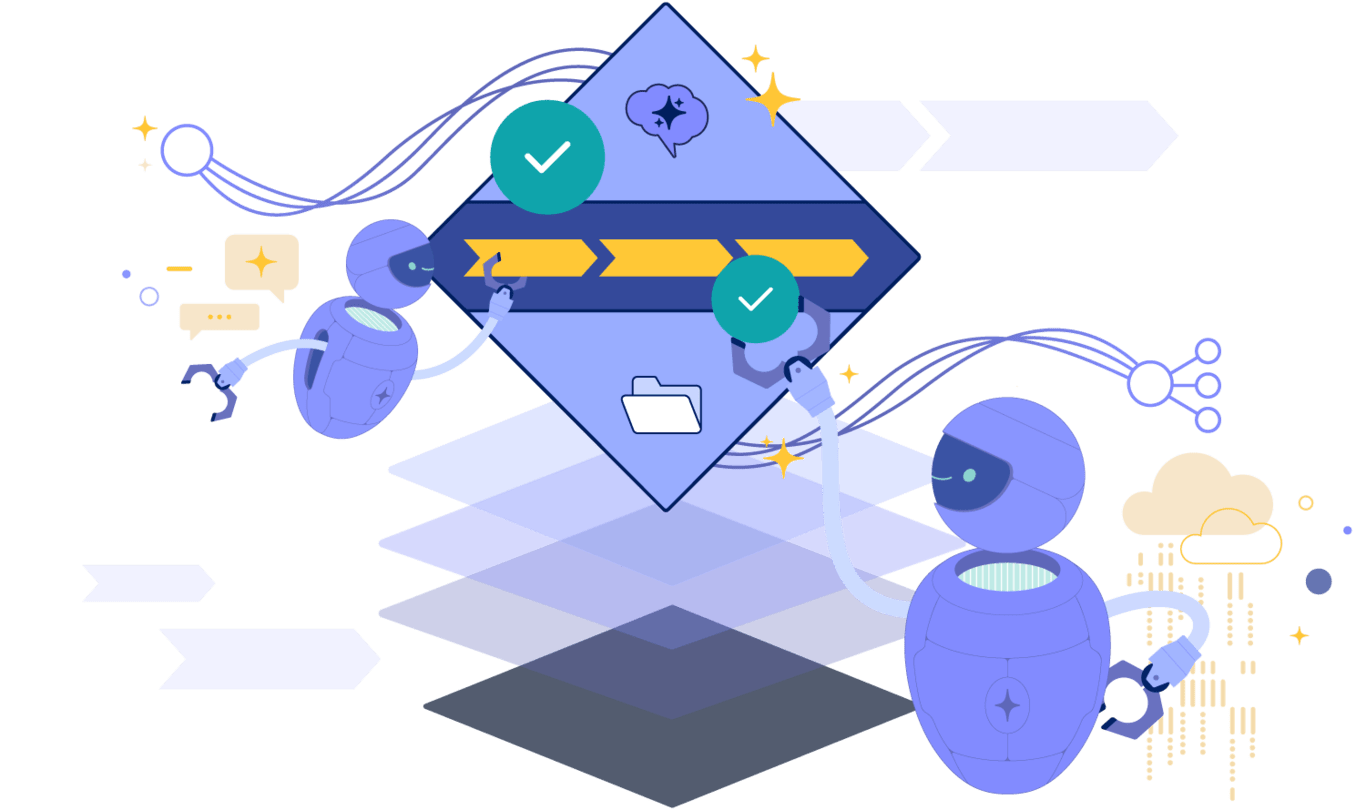
Agentic orchestration is the next evolution of AI – where specialized agents collaborate to achieve complex goals. Each agent brings unique skills, working together seamlessly to deliver optimal business outcomes. This intelligent coordination enables organizations to automate complex processes, provide real-time guidance, and adapt workflows dynamically to meet changing business needs.

Why is agentic orchestration important?

Agentic orchestration unlocks a new level of intelligent automation by enabling AI agents to collaborate, adapt, and make decisions in real time, driving efficiency, scalability, and innovation across industries.

Benefits of agentic orchestration

  • Scalable intelligence: Easily add new specialized agents to handle growing complexity without rebuilding entire systems.
  • Dynamic adaptability: Agents can adjust their strategies in real time based on changing business conditions and new data.
  • Enhanced decision-making: Multiple AI agents contribute specialized insights, leading to more adaptive and intelligent business decisions.

discovering the benefits of personalization engines

How does agentic orchestration work?

Agentic orchestration works by coordinating multiple AI agents—each with specialized skills—so they can collaborate to achieve a larger goal. Instead of relying on a single model to handle everything, the system assigns tasks to the most capable agent, manages their interactions, and integrates their outputs. This creates a more flexible, adaptive approach that allows AI to handle complex, dynamic workflows efficiently.
how agentic systems work

Reimagine AI-powered transformation with Pega

Learn more

Core capabilities of agentic orchestration

AI-driven decision framework

Rapidly deploy and coordinate multiple AI models to predict business outcomes and recommend optimal actions.

Real-time event processing

Enable agents to make intelligent decisions on events as they occur – so they can immediately respond to changing conditions.

Intelligent workflow automation

Orchestrate complex multi-step processes where different AI agents handle specialized tasks within the same workflow.

Predictive analytics integration

Use predictive analytics as an input to make smarter, more forward-looking decisions.

Integrated intelligence engine

Provide a central platform where diverse AI capabilities can communicate and collaborate seamlessly.
overcoming the challenges of AI workflows

Challenges with agentic orchestration

  • Governance, trust, and predictability: The lack of predictability in autonomous agents’ execution creates significant risk for mission-critical operations and makes it challenging to audit why an agent made a specific decision – a major barrier to compliance in regulated industries.
  • Coordination complexity: Managing communication and task delegation among multiple autonomous agents can lead to inefficiencies or conflicts.
  • Security & controls: Designing effective human-in-the-loop controls that are intelligent enough to know when to escalate to a human with enough context for quick interventions can be difficult to achieve, without also negating the efficiency gains of automation.

While agentic orchestration presents unique complexities, each challenge opens the door to innovation and refinement. With thoughtful design, robust tooling, and a growing ecosystem of best practices, organizations can harness the full potential of autonomous agents. As the field evolves, these hurdles become stepping stones toward more adaptive, intelligent, and resilient systems.

Common use cases for agentic orchestration

Customer service excellence

Enable conversational self-service agents, sentiment analysis agents, and decision engines to provide personalized customer experiences.

Supply chain intelligence

Coordinate demand forecasting, inventory optimization, and logistics planning agents for end-to-end supply chain efficiency.

Risk management

Integrate fraud detection, compliance monitoring, and decision-making agents for comprehensive risk assessment and mitigation.

introducing ai agents

The future of agentic orchestration

Building an agentic operation means putting AI you can trust at the center of the customer journey. To move into the future, organizations need to scale AI quickly and with confidence. Agentic orchestration makes this possible by:

  • Accelerating modernization: Retiring legacy apps, automating workflows, and speeding the move to the cloud.
  • Enforcing governance: Ensuring rules, regulations, and standards are consistently followed across operations.
  • Connecting the enterprise: Bridging front-, mid-, and back-office so experiences and operations flow seamlessly.
  • Driving end-to-end orchestration: Coordinating people, AI, and systems to deliver work faster and more intelligently.
  • Guiding employees: Helping them focus on what matters most, working more effectively with AI assistance, and onboarding rapidly.

This is the foundation for the next era of agentic orchestration – where trusted AI doesn’t just automate tasks but orchestrates the enterprise to adapt and perform at speed.

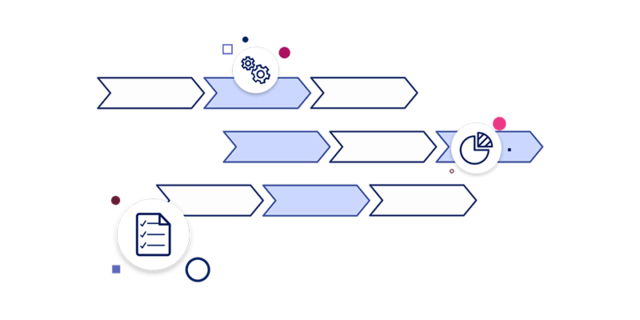
How Pega unlocks agentic orchestration across the enterprise

Step 1

Rapidly reimagine legacy systems with Pega Blueprint™, using AI-powered tools to modernize workflows and customer experiences in days, not months. Pega uniquely fuses AI agents with deep industry expertise for fast, large-scale transformation.

Step 3

Seamlessly connect all business functions using Pega’s Center-out architecture, streamlining customer journeys across channels and hiding data integration complexities.

Step 4

Deploy Pega Predictable AI Agents to rapidly deliver customer self-service and employee assistance powered by trusted workflows.

Step 5

Leverage Pega Agentic Process Fabric as the gateway of your agentic workforce to deploy the power of all your agents governed from one endpoint, intelligently selecting and dispatching the right agent or system to get work done.

Frequently asked questions on agentic orchestration

Multiple AI agents communicate and coordinate tasks through structured protocols, such as message passing, shared memory, or blackboard systems. Each agent has a defined role and goal, and they exchange information to delegate tasks, resolve conflicts, and align on shared objectives. Coordination can be managed centrally by an orchestrator or through decentralized peer-to-peer interactions, depending on the system design.

Agentic systems adapt to changing business conditions by continuously sensing their environment, reassessing goals, and modifying their strategies in real time. Each agent operates autonomously but shares context with others, allowing the system to respond dynamically to shifts in market demands, customer behavior, or operational constraints. This flexibility enables businesses to stay resilient and responsive without manual reconfiguration.

Human oversight plays a critical role in agentic orchestration by setting strategic goals, defining ethical boundaries, and ensuring accountability. While agents operate autonomously, humans guide system design, monitor performance, and intervene when necessary to correct errors or align outcomes with business objectives. This partnership ensures that agentic systems remain trustworthy, transparent, and aligned with human values.

Ready to learn more?

AI Workflow automation

Tech knowledge

Discover how AI workflow automation is revolutionizing business operations by boosting organizational efficiency.
Woman Holding Phone Carousel

Tech knowledge

Learn how real-time decisioning helps brands analyze customer interactions and personalize experiences instantly.
Decisioning Engines

Tech knowledge

Learn how businesses leverage decisioning engines to provide customers with personalized experiences across channels.
Workflow Orchestration Carousel

Tech knowledge

Learn how workflow orchestration boosts efficiency by reducing manual tasks and enabling swift, data-driven decisions.
Generative AI SEO Carousel

Tech knowledge

Find out how enterprise generative AI transforms business operations, boosts productivity, and drives innovation.
AI workflows seo carousel

Tech knowledge

Learn how AI workflows automate complex tasks by using data, rules, and models to drive decisions and streamline processes.

Transform how you innovate with Pega Blueprint

Learn more
Share this page Share via X Share via LinkedIn Copying...