メインコンテンツに飛ぶ

We'd prefer it if you saw us at our best.

Pega.com is not optimized for Internet Explorer. For the optimal experience, please use:

Close Deprecation Notice
このページはあなたの言語(日本語)ではご利用いただけません。元の言語(英語)で以下からお読みいただけます。

Agentic workflows

Streamline operations and unlock the power of AI agents
learning what agentic systems are

What are agentic workflows?

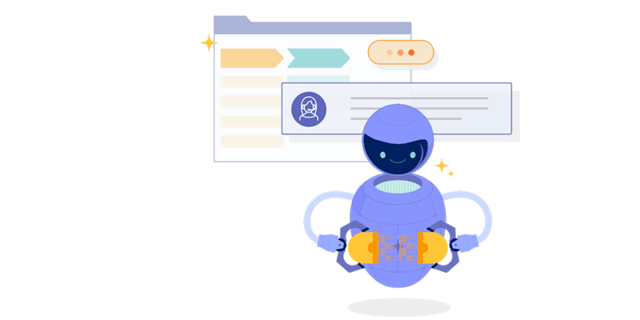
Agentic workflows are dynamic, goal-driven processes where autonomous AI agents make decisions, plan next steps, and execute tasks – all with minimal human guidance. By combining autonomy with adaptability, agentic workflows streamline operations while enhancing efficiency, scalability, and resilience.

Why are agentic workflows important?

In today’s fast-paced environment, static processes just can’t keep up. Agentic workflows bring adaptability and intelligence, enabling enterprises to deliver faster, smarter, and more consistent outcomes.

Benefits of agentic workflows

  • Enhanced customer experience: Agentic workflows interpret customer intent to guide self-service resolutions, while assisting service reps, boosting satisfaction, and lowering costs.
  • Increased operational efficiency: Agentic workflows automate complex, end-to-end processes with real-time decisions, enabling straight-through processing that cuts time, reduces manual effort, and transforms operations.
  • Hyper-personalized engagement: By analyzing real-time data, AI agents identify customer needs and deliver personalized experiences that boost engagement and loyalty.
professional benefitting from ai workflows

How do agentic workflows work?

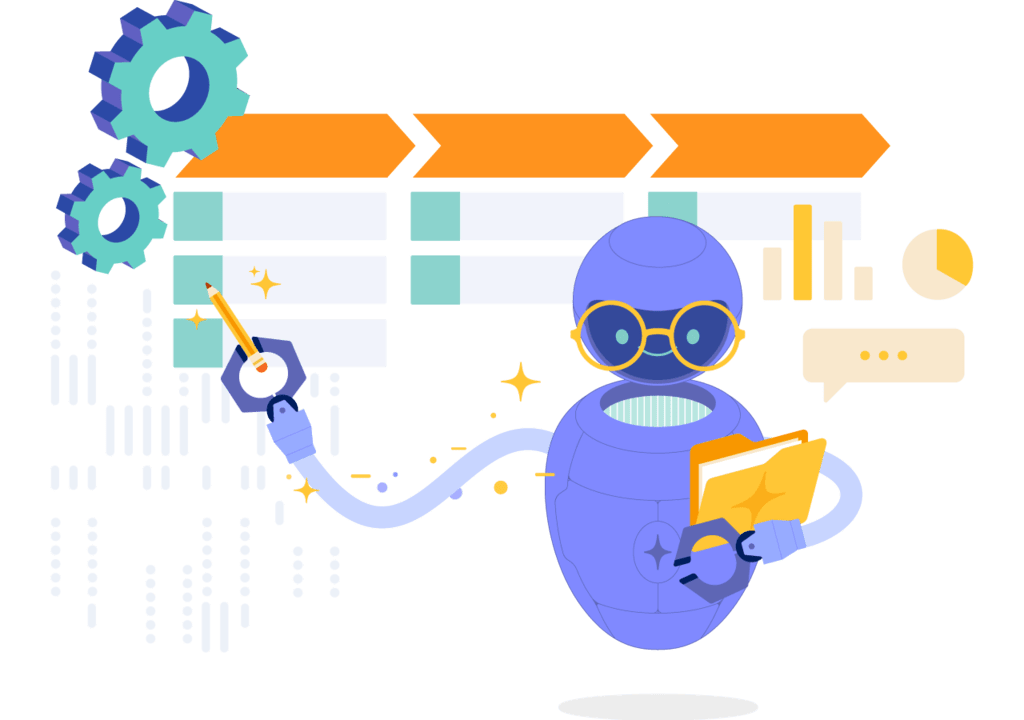
Agentic workflows operate in a cycle: AI agents perceive their environment, analyze data to make decisions, and then act to achieve a defined goal. They can use various tools, access knowledge, and collaborate with other agents or humans to complete their tasks – learning and adapting over time.

explaining how ai agents works

Build an AI-powered future with agentic workflows

Learn more

What’s the difference between traditional automation and agentic workflows?

Traditional automation

  • Follows predefined rules and sequences
  • Requires manual updates for process changes
  • Operates in isolation from broader business context
  • Needs human intervention for exceptions
  • Ideal for high-volume, predictable, and unchanging tasks

Agentic workflows

  • Make intelligent decisions based on context and data
  • Adapt automatically to new situations and requirements
  • Understand and work toward strategic business goals
  • Resolve exceptions autonomously or escalate appropriately
  • Handle complex, variable, and less structured work that requires reasoning, judgement, and problem-solving

Components of agentic workflows

Understanding agentic workflows begins with dissecting their fundamental building blocks. These components work in synergy to enable the dynamic, intelligent behavior that sets agentic systems apart.

Large Language Models (LLMs)

LLMs interpret complex user intent, generate multi-step plans, and provide the intelligence that allows agents to decide the best course of action to achieve a goal.

AI agents

AI agents are autonomous task executors. They carry out the plan, use tools, call APIs, and interact with various systems to perform the concrete actions required to complete the workflow steps.

Workflow orchestration

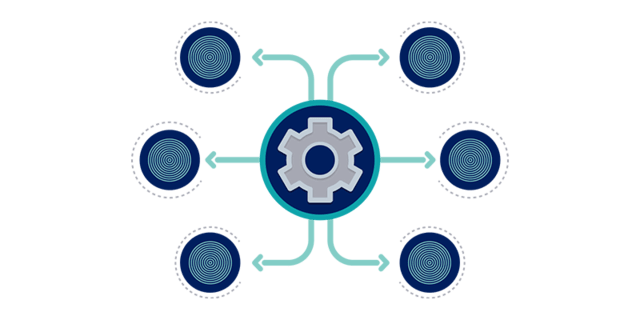
Workflow orchestration guides AI agents on how to achieve goals by sequencing tasks, coordinating specialized agents, adapting to new information, and using feedback loops for continuous improvement.

Memory and context management

AI agents rely on strong memory and context management, using short-term memory for current interactions and long-term memory to recall past experiences, ensuring continuity, learning, and effective problem-solving.

Human oversight and intervention

Human oversight and intervention are key in agentic workflows, letting humans validate outputs, correct errors, enforce ethics, and provide feedback to continuously improve AI agent performance.

Common use cases for agentic workflows

Customer service

Agentic workflows enhance customer support by understanding intent and routing inquiries, guiding self-service, or assisting reps with smart recommendations for faster, accurate resolution.

Financial services

In banking, agentic workflows enhance fraud detection by analyzing transactions, spotting suspicious activity, and triggering automated investigations that resolve cases while ensuring regulatory compliance.

Healthcare

Healthcare organizations use agentic workflows to analyze patient data for proactive care, automate scheduling, and guide patients and providers – all while ensuring privacy and compliance.

Challenges of EAD

Challenges with agentic workflows

While agentic workflows are powerful for handling dynamic and complex tasks, using them for work that must be repeatable and predictable introduces several significant challenges that organizations must navigate carefully.

  • Lack of predictability: Advanced AI models, especially those powering AI agents, are non-deterministic. This means that given the exact same input, an agent might produce different outputs or take a different path to a solution, which is unacceptable for processes requiring consistency.
  • Ethical and compliance risks: AI agents must act ethically and meet regulatory requirements. Understanding why an agent made a specific decision can be extremely difficult.
  • Data quality and integration: Inaccurate or fragmented data can lead to poor decisions and workflow failures.

Despite these challenges, organizations that address them proactively can unlock significant efficiency, accuracy, and scalability benefits, positioning themselves to fully capitalize on the transformative potential of agentic workflows.

Steps to successful implementation of agentic workflows

Assessment and planning

Identify processes with complex decisions, multiple systems, or high manual effort that can benefit from agentic automation.

Pilot implementation

Launch a focused pilot with measurable outcomes to demonstrate value and allow the team to learn.

Governance and guardrails

Set clear rules, escalation paths, and compliance standards for AI agent operations.

Continuous optimization

Monitor, refine, and expand workflows as agents learn and your organization gains confidence with autonomous operations.

What does the future of agentic workflows look like?

Agentic workflows are another step toward the autonomous enterprise – where AI drives smarter decisions, predictive insights, and seamless integration across systems. Organizations that embrace these workflows today will gain a competitive edge, unlocking the full transformative potential of AI as it continues to evolve.

introduction to ai agents

Pega’s approach to agentic workflows

Pega pioneered the concept of the autonomous enterprise and continues to lead in agentic workflow innovation by combining the power of AI agents and the predictability of workflows to unleash AI-powered transformation with confidence. With Pega, design-time agents apply AI reasoning alongside human expertise to build agentic workflows. At runtime, AI agents interpret user requests, select the appropriate workflow, and execute it in a governed, predictable manner. Our comprehensive approach combines proven workflow management with cutting-edge AI capabilities to deliver real business value.
Pega Blueprint™

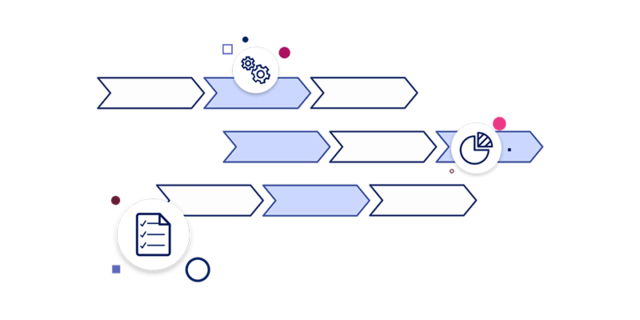
Pega Blueprint serves as the cornerstone for designing, deploying, and refining agentic workflows. This innovative platform enables organizations to create sophisticated workflows using natural language prompts, dramatically accelerating time-to-market while ensuring alignment with strategic objectives.

Predictable AI agents

Pega’s predictable AI agents understand complex user intent and select and execute workflows in a predictable and governed way. Besides, Pega's agentic workflows go beyond traditional automation to embed Predictable AI agents as steps in workflows, expanding automation to dynamic and complex tasks.

Business Orchestration and Automation Technology (BOAT)

Our BOAT framework ensures that agentic workflows operate within established business rules and best practices, providing the right AI to the right use case with the governance and control enterprises need while maintaining the flexibility and intelligence that drive results.

Frequently asked questions on agentic workflows

AI agents share information, update task statuses, and trigger actions through centralized orchestration or APIs, ensuring tasks are coordinated, dependencies managed, and goals are achieved efficiently.

Human oversight validates outputs, corrects errors, enforces ethical standards, and provides feedback, ensuring AI agents operate safely and align with organizational objectives.

Machine learning and AI power agents to interpret data, make decisions, adapt to new information, and continuously improve performance – enabling intelligent, autonomous workflow execution.

Ready to learn more?

AI Workflow automation

Tech knowledge

Discover how AI workflow automation is revolutionizing business operations by boosting organizational efficiency.
NBA SEO Carousel

Tech knowledge

Learn how next best action utilizes a combination of AI and real-time data to create relevant customer experiences.
AI Orchestration Intro carousel

Tech knowledge

Discover why businesses are increasingly relying on AI orchestration for better decision-making.
AI workflows seo carousel

Tech knowledge

Discover how autonomous agents improve business outcomes and productivity over time with minimal human intervention.
Process Automation Carousel

Tech knowledge

Learn how process automation uses technology to streamline operations and reduce the need for human intervention.
Workflow Orchestration Carousel

Tech knowledge

Learn how workflow orchestration boosts efficiency by reducing manual tasks and enabling swift, data-driven decisions.

Transform how you innovate with Pega Blueprint™

Learn more
シェアする Xで共有 LinkedInで共有 Copying...