
In enterprise IT, we've become accustomed to a certain rhythm: a familiar, if often frustrating, cycle of software development. As a February 2025 McKinsey & Company report highlights, while "AI has the potential to fundamentally transform the development of software products," realizing that potential requires "critical shifts in the software product development lifecycle (PDLC)."1
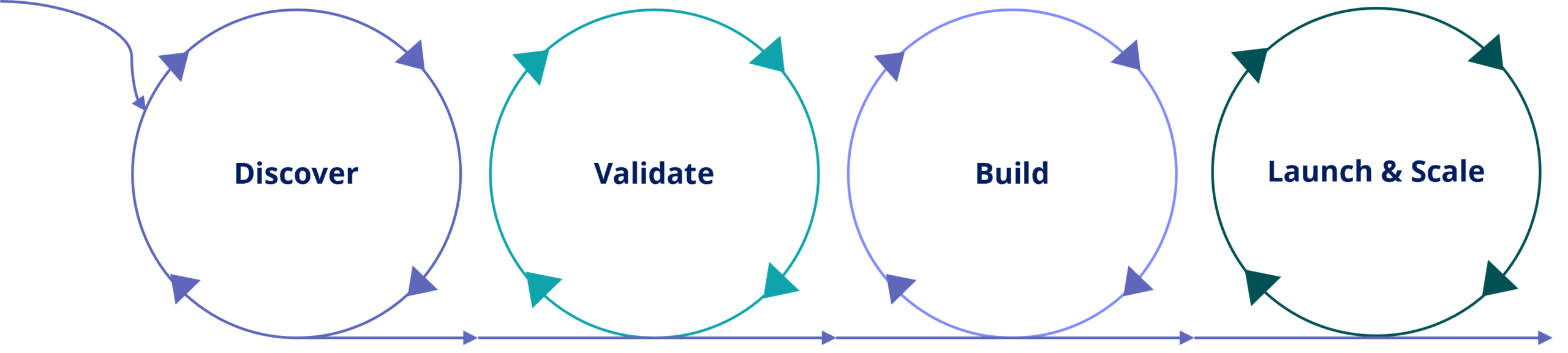
Figure 1. Current software product development life cycle (PDLC) (SOURCE: McKinsey & Company)
The authors proposed a streamlined, AI-enabled model that condenses the traditional four stages of discover, validate, build, and launch into just two: design and build.
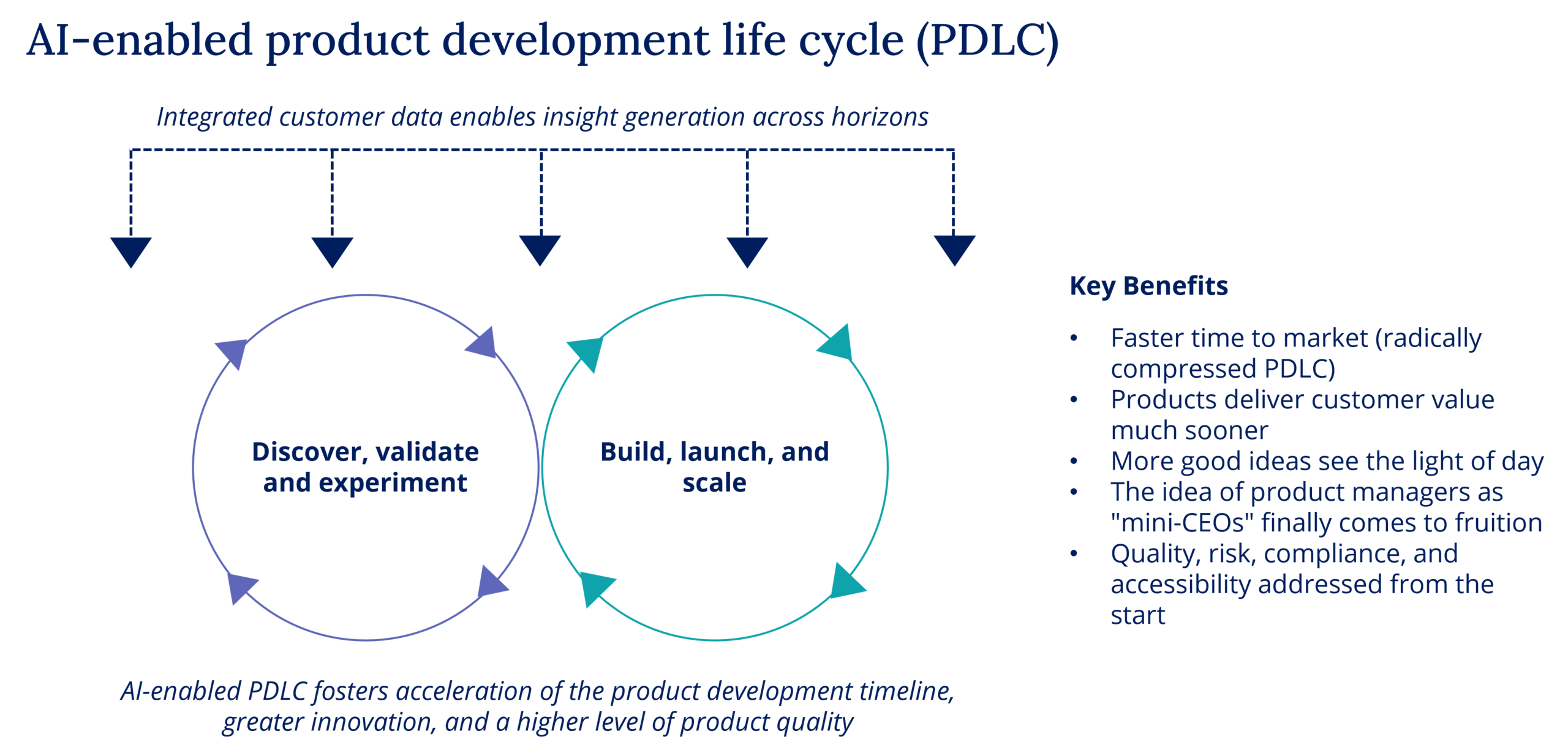
Figure 2. AI-enabled product development life cycle (PDLC) (SOURCE: McKinsey & Company)
This is a powerful and necessary evolution. By simplifying the model, we can accelerate development, improve product quality, and drive greater innovation. But this vision, as transformative as it is, doesn't go far enough. It focuses on accelerating the build process but overlooks an even greater opportunity: using the same model to fundamentally reshape how enterprise software is bought and sold.
The chasm between "getting to yes" and getting to work
For anyone who has been part of a major enterprise software deal, the traditional process is painfully familiar. The sales cycle can stretch from six to 18 months, involving endless discovery sessions, demos, and proof-of-concepts. When the deal finally closes, a chasm often opens up. The pre-sales team hands off a mountain of documents and a "glorified demo" to the implementation team, which then starts its own discovery process.
Looked at side-by-side, the sales and delivery cycles are essentially mirror images of each other, with knowledge and effort lost in the gap between them.
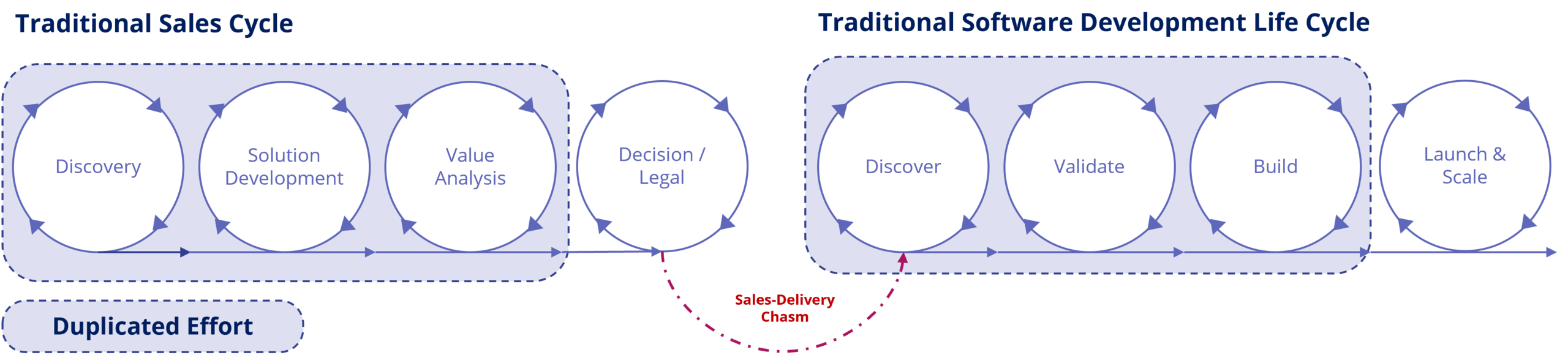
This isn't a flaw in execution; it's a limitation of traditional technology. Because enterprise software can be resource-intensive to deploy, the goal of the sales process has always been a careful balancing act: design and build just enough to generate the trust needed to get to a signed contract. Whatever ends up being created during this process is almost always destined for the cutting room floor.
A new vision: Merging sales and delivery
Imagine a different world. Imagine if the work done during the sales cycle wasn't a temporary artifact to be discarded, but the actual, actionable foundation for the final application. Imagine if discovery happened once, thoroughly, during the sales engagement, creating a direct and seamless bridge to implementation. And imagine if delivery teams didn't start with a requirements document, but with a fully functional, agentic prototype – a foundational build designed to actually be used – they could begin refining on day one.
The true power of the model McKinsey proposes isn't just in reducing four stages to two, but in its potential to eliminate six redundant stages and the entire concept of a separate "sales cycle."
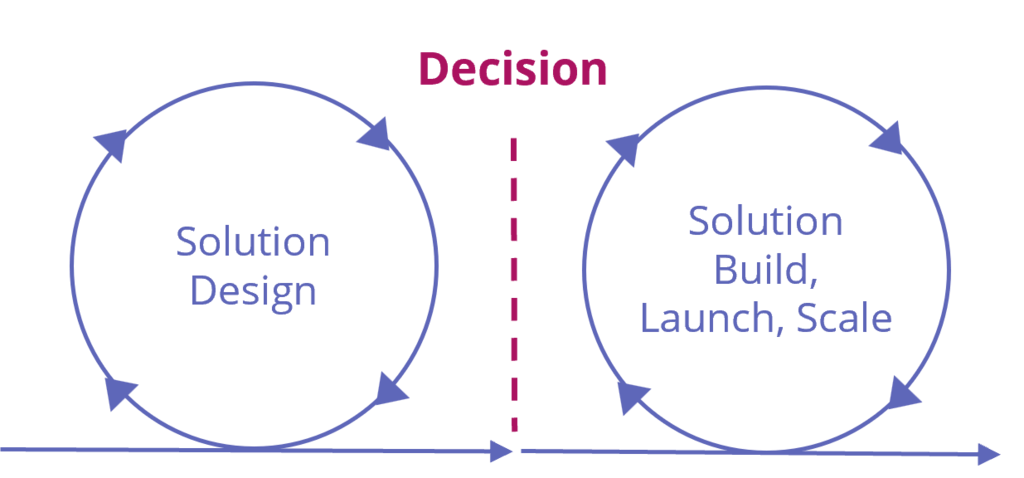
How it works: Introducing the Solution Designer
This new paradigm is powered by two new role families: the Solution Designer and the Solution Builder. It's critical to think of these as skill sets and mindsets, not just new job titles.
Solution Designer
The Solution Designer is a strategic creator who bridges business vision and technology execution using GenAI tools like Pega Blueprint® . They lead discovery sessions, capture business intent, and translate client goals into build-ready designs that drive transformation.
They:
- Lead Blueprint co-creation sessions to visualize solutions with clients.
- Align business and IT to reduce complexity and accelerate delivery.
- Turn ideas into actionable, AI-assisted Blueprint designs.
Solution Builder
The Solution Builder is the hands-on delivery expert who transforms Blueprint designs into production-ready applications. They leverage Pega Infinity™ to bring solutions to life with speed, precision, and scalability.
They:
- Transform Blueprints into working applications using best practices.
- Leverage AI and automation to improve performance and delivery speed.
- Partner with Solution Designers to ensure alignment and quality.
The Solution Designer is not just a new name for a business analyst (BA). While BAs are certainly part of this role family, so too are citizen developers, solution consultants, and even account executives. For sales personas, their remit fundamentally changes. Instead of creating a minimal viable demo, their goal is to co-create a comprehensive, build-ready design that minimizes the need for rework and accelerates the path to value.
Pega Blueprint: The engine for GenAI-powered solution design
This revolutionary approach is only possible with tools that support continuity from design to deployment. Pega Blueprint is the only tool available today that fully empowers the Solution Designer. By leveraging GenAI, it allows teams to:
- Capture and translate business intent. Turn high-level goals and conversational inputs directly into detailed application Blueprints.
- Generate application components. Automatically create core elements like case types, data models, workflows, and user interfaces directly from the design.
- Enable real-time co-creation. Allow business and IT stakeholders to collaboratively design and refine the application visually, ensuring complete alignment before the build begins.
- Create actionable work products. Produce a high-fidelity Blueprint that serves as a direct, usable starting point for the Solution Builder team, effectively eliminating rework and collapsing the development lifecycle.
Once the design is complete, that Blueprint is instantly imported into the Pega Infinity platform, where Solution Builders can immediately begin refining, integrating, and preparing the application for production.
Solution design for all: The new mandate
This isn't just a theory – it's a practical approach that is delivering tangible results. By embracing this model, we are committing to a new standard where a "high-fidelity Blueprint" is the final deliverable of every sales engagement. This ensures:
- Continuity. The line between pre- and post-sales dissolves. There is no hand-off; there is only a continuous delivery motion.
- Project momentum. Every minute spent with a client is a productive step toward a live solution, not just a step toward a signature.
- Outcome certainty. Clients see, interact with, and validate exactly what they are getting before they buy, de-risking the entire project.
- Democratization. With intuitive, GenAI-powered tools, anyone with a deep understanding of the business problem can become a Solution Designer.
The proof is in the outcomes. Organizations adopting this Blueprint-led approach are seeing:
- 50% faster sales cycles
- 80% of projects go live in 90 days or less
- 30% less rework
- 42% higher Net Promoter Scores
The new generation of AI-powered development tools is unlocking immense potential. However, simply licensing new software without intentionally evolving the organizational practices that surround it is, as the old analogy goes, like pouring new wine into old wineskins. The dynamic, transformative pressure of GenAI will inevitably burst inflexible legacy processes, wasting its potential and damaging existing structures.
By adapting our processes to these powerful new tools, we unlock their true value. The stewards of this change are the Solution Designers – the business and IT leaders who are not just building software, but architecting the future of how enterprises operate.